
Municipal Infrastructure Work Follows a Predictable Planning Cycle
City and county governments manage capital infrastructure through structured, multi-year planning processes. Long before an RFP is released for a bridge, roadway, facility upgrade, stormwater project, or water system improvement, these agencies publish signals and indicators showing what work is coming next.
For architecture, engineering, and construction (AEC) firms making strategic decisions about pipeline development, resource allocation, and competitive positioning, these early government RFP signals represent a critical head start. When teams can identify infrastructure projects 6 to 12 months before formal solicitation, they gain more time to position strategically, secure team commitments, engage with decision-makers, and prepare proposals with real context instead of assumptions.
Understanding and interpreting these signals is quickly becoming increasingly important for AEC firms competing in the municipal government sector. Firms that can forecast their pipelines accurately gain a significant competitive edge in their go/no-go decisions, resource planning, and win rate management.
The Municipal Capital Planning Cycle Reveals Projects Years in Advance
Municipal governments don’t start capital projects on impulse. They follow structured planning and budgeting processes that unfold over years, and those processes create a visible trial of indicators. Below are some of the most common early indicators:
Critical Early Indicators You Should Be Monitoring
i. Capital Improvement Plans (CIPs)
Most municipalities update their CIPs annually or biennially. These documents outline multi-year infrastructure priorities including:
- Planned facility upgrades and renovations
- Transportation and roadway improvements
- Water and sewer system needs
- Parks and recreation facility projects
- Public safety building construction and renovations
While timelines may shift, CIPs consistently signal which projects are moving toward procurement and when design or construction phases will likely begin. For AEC leaders, a project listed in Year 2 or 3 of a CIP signals that design procurement will likely occur within 12 to 24 months.
ii. Budget Hearings and Appropriations
Budget discussions reveal where funding flows. When a municipality increases appropriations in specific budget categories — transportation, utilities, stormwater, public buildings — often point to upcoming capital work.
More importantly, budget increases often happen 6 to 12 months before design consultant selection. Monitoring municipal budget cycles gives you early insight into which project types will be prioritized in the coming year.
iii. Council Meeting Agendas
City councils and county boards frequently discuss projects long before RFPs appear. Regular agenda items include:
- Consultant studies and feasibility assessments
- Environmental reviews
- Land acquisition or disposition
- Grant applications & funding requests
Each discussion represents an upstream step toward future procurement.
iv. Long-Range Planning Documents
Transportation master plans, stormwater management plans, water system studies, and land-use plans identify major infrastructure priorities that eventually materialize into procurement opportunities.
These sources signal the direction of municipal infrastructure investment and help AEC leaders anticipate which project types and locations will drive future bidding opportunities.
v. Contract Renewal and Re-Bid Cycles
While some municipal projects are one-time capital efforts, many professional services and infrastructure contracts follow predictable renewal patterns. Understanding these cycles helps AEC firms anticipate upcoming pursuits.
Typical renewal or re-solicitation indicators include:
- Expiring design or engineering contracts
- Ongoing inspection or maintenance agreements
- On-call or indefinite-delivery/indefinite-quantity (IDIQ) contracts reaching term limits
- Multi-year consulting engagements nearing completion
Agencies often re-solicit recurring work as contracts end.
By monitoring contract databases, public records, or agency websites, firms can anticipate:
- When an incumbent’s term is ending
- When a new solicitation is likely
- Whether scope expansion is probable
This is where AI pre-RFP intelligence add value. These tools help synthesize public information, accelerate research, and surface patterns that are difficult to track manually.
Federal and State/ Provincial Funding Announcements Signal Major Work
Municipal infrastructure investment depends heavily on federal and state/ provincial funding. When a city or county announces receipt of grant funding for infrastructure, it typically signals that project-specific RFPs will follow within 6 to 18 months.
Watch for announcements related to:
- Federal Infrastructure Programs
- State or Provincial Housing-enabling Infrastructure Programs
- Water system and environmental improvement grants
- Public safety facility funding initiatives
While AEC teams can manually review these documents, many now use tools that support AI for Early RFP Discovery to consolidate signals across jurisdictions. The goal isn’t replacing expertise; it’s reducing the time it takes to understand where agencies are investing and when relevant work will appear on the market.
Early Signals Enable Better Positioning, Resource Planning, and Pipeline
For AEC firm leaders, pipeline visibility directly impacts strategic decision-making. Here’s why early signal monitoring changes how you manage your business.
Relationship Building and Pre-RFP Positioning
Early signal awareness gives you time to build relationships. Rather than meeting a project manager for the first time when the RFP drops, you can engage and position your firm with the agency’s staff before the formal procurement.
Firms that engage early with municipal decision-makers during the planning phase win more often and at better terms than firms that only appear when the RFP is released.
Strong Resource Allocation
When you know that three transportation design projects will likely move to procurement in the next 12 months, you can make more informed decisions about which team members/ specialized experts to reserve. Early visibility turns resource planning from reactive scrambling into strategic allocation.
Accurate Pipeline Forecasting
Traditional pipeline forecasting is inaccurate. Early signal monitoring improves forecast accuracy because you’re basing projections on actual municipal plans, and not speculations.
Better Go/No-Go Decisions
Most AEC firms hold weekly or monthly meetings to decide which RFPs to pursue. These decisions are typically made based on limited information. But if you’ve been monitoring early signals, you enter those meetings with much deeper context.
Ultimately, early procurement intelligence helps AEC firms transition from reactive bidding to proactive pipeline development, improving competitiveness across every stage of the pursuit process.
Early Municipal Infrastructure Signals Exist – AEC Firms Just Need to See Them
Municipal infrastructure projects don’t appear suddenly. Agencies leave a clear trail of public signals showing what work is coming: planning documents, budget approvals, contract renewals, and long-term infrastructure studies. These signals typically appear 6 to 12 months before the RFP is released, sometimes longer.
The firms that learn to identify and interpret these signals gain a meaningful advantage. They prepare earlier, engage earlier, and compete with more context than their peers.
And in a market where timing can influence everything from relationships to proposal quality, early awareness often becomes the deciding factor in who wins the work.
Ontopical helps AEC leaders forecast municipal infrastructure opportunities with early procurement intelligence that surfaces 6 to 12 months before RFPs are released, enabling better pipeline visibility, more confident go/no-go decisions, and stronger competitive positioning.
See How Early Signals Strengthen Your Pipeline
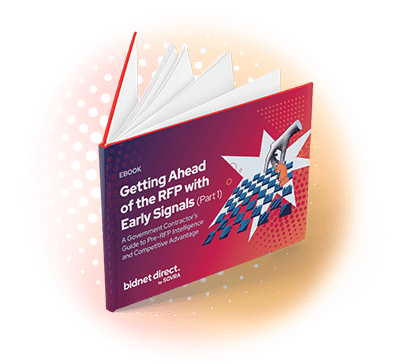
Download the eBook to explore how early-stage intelligence helps AEC firms forecast future opportunities, prepare strategically, and win more municipal work.
FAQs
1. How far in advance can AEC firms realistically identify upcoming municipal projects?
In most cases, agencies share early indicators months before issuing an RFP—through capital plans, budget discussions, council agendas, planning documents, and early consultant studies. While exact timelines vary, these publicly available signals often surface 6–12 months ahead of a formal solicitation.
2. What types of early signals are most helpful for predicting infrastructure work?
The most valuable signals include capital improvement plan updates, funding allocations, grant awards, feasibility studies, environmental reviews, and contract renewal timelines. These sources collectively help AEC teams understand what projects are likely to move into procurement next.
3. How can early signals improve win rates for AEC firms?
Early awareness gives teams more time to build relationships, refine strategies, align internal resources, evaluate pursuit fit, and prepare stronger proposals. This shift from reactive bidding to proactive planning helps firms compete with better insight and more confidence.
4. How does early signal monitoring differ from traditional business development?
Traditional business development often focuses on relationship-building and responding to RFP releases. Early signal monitoring adds a planning layer that sits upstream of traditional BD. Rather than only pursuing opportunities when the RFP appears, you’re analyzing the municipal planning cycle to forecast what projects will likely be procured in the coming 6 to 24 months. This allows you to be proactive about positioning, relationship-building, and resource allocation rather than reactive to RFP releases.